There is an hour in the dead of December when the world seems to have forgotten the sun. The roads are black, the houses shuttered, the frost lies unbroken on the grass. Yet in certain parish churches, a few hundred people have already risen, dressed in the cold, and come out of warm beds to kneel in the dark.
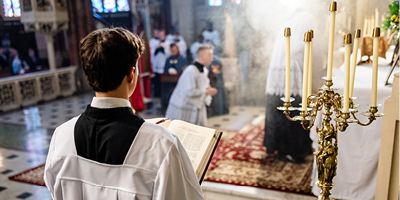
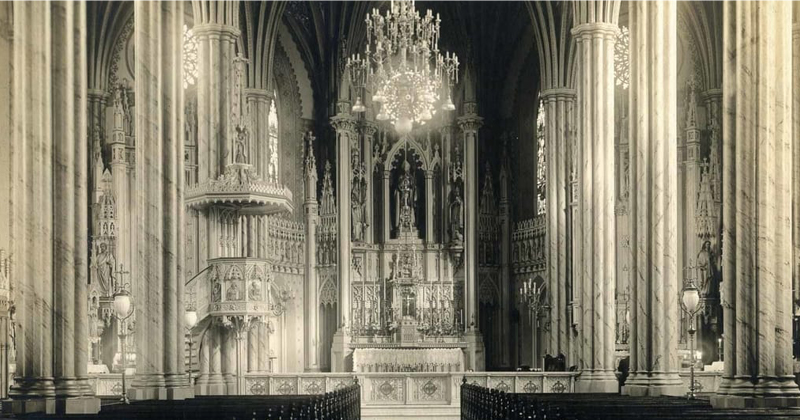
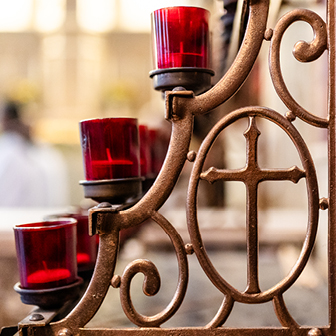
A visitor might think them eccentric, for we are a people who have spent a century and a half perfecting the art of never being in the dark, and they have gone to some trouble to find it. Nothing is lit but the candles upon the altar and the few the faithful have in their hands. The ceiling is lost in shadow, and one can scarcely see the face of the man in the next pew. Out of that darkness, from the choir, rises one of the oldest cries of Advent: Rorate, caeli, desuper. Drop down dew, ye heavens, from above, and let the clouds rain the Just One; let the earth be opened, and bud forth a Savior.
Why do they come? Not for comfort, certainly, and not out of any sentimental fondness for early rising. They have come to wait, and the Church has always known that waiting is not idleness. It is the posture of the whole creation since Adam went out of the garden. The world waited for thousands of years in the dark, and for the length of this one Mass, we are permitted to wait as the world waited, with cold hands and open eyes, not knowing the hour, only that it will come.
Then, something happens that no one has done. The windows, which were black, turn a faint gray. The gray takes a little color. Slowly the saints in the glass put on their faces, and the candles, which a moment ago seemed to hold the whole church in their small keeping, grow pale and unnecessary. No one has touched a switch. No one has labored to bring it about. The dawn is simply coming, as it came yesterday, as it will come when we are dead and forgotten. That is the whole sermon of the Rorate Mass, and the Mass preaches it better than any priest.
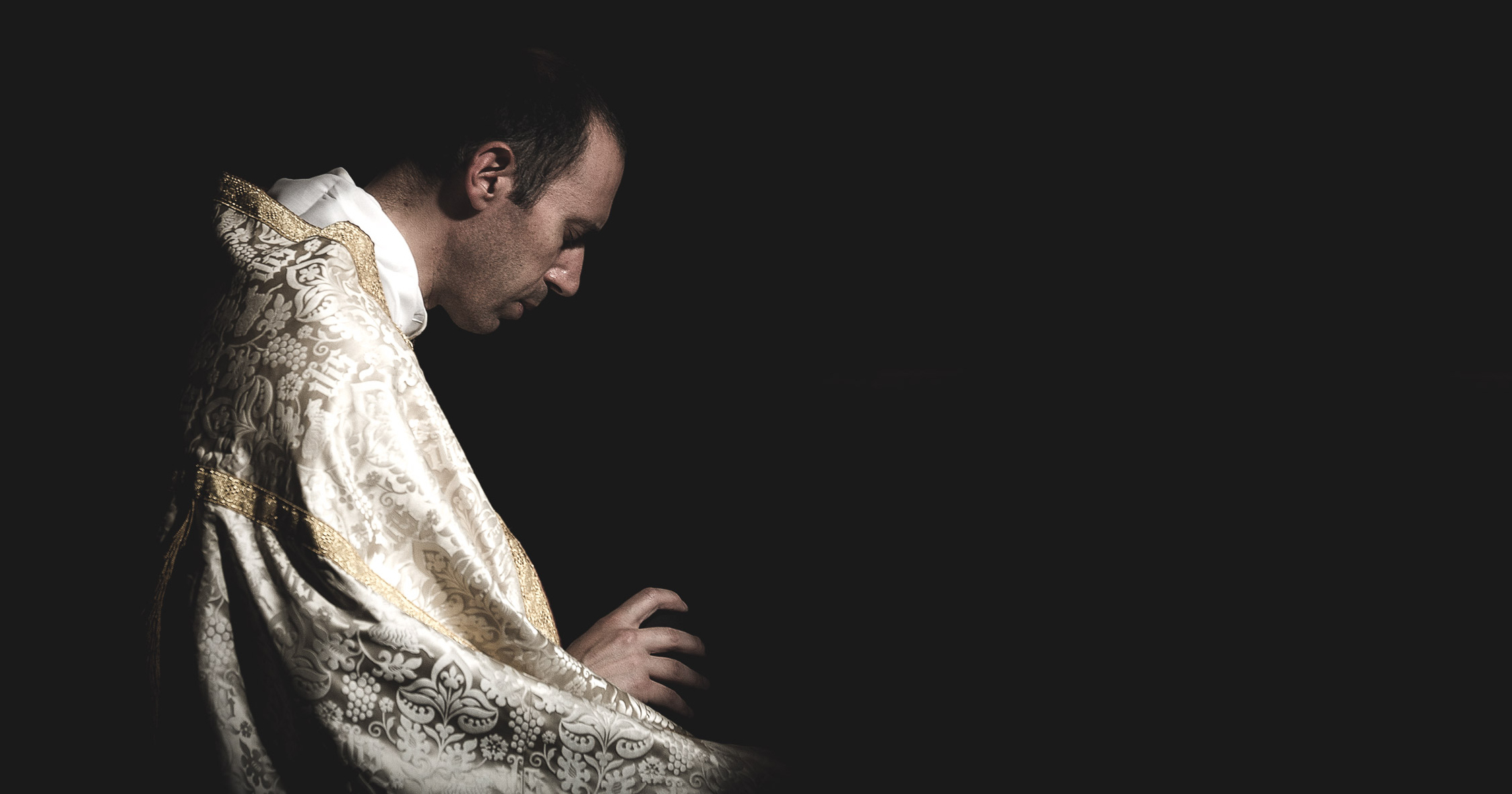
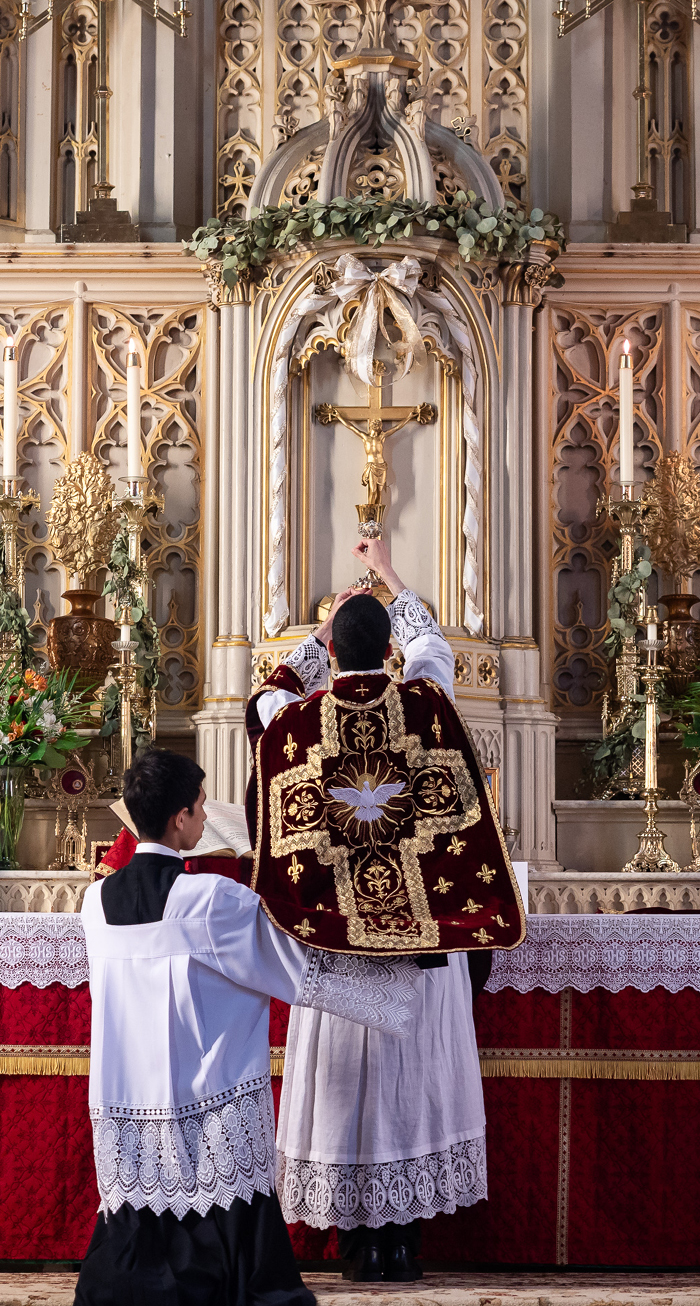
Observe, too, that the vestments are white. In the penitential season, the Church lays aside her violet for this Mass, and she does it for our Lady. Let it be said plainly that Our Lady is not the Light; she is the window through which the Light came into the world, and she would be the first to tell us so.
But the Church has a name for her that belongs to this very hour: the Morning Star. It is the one star that is still burning when all the others have gone, and it rises only when the night is nearly spent. It does not make the day. It tells the watcher that the day is coming, and that is why the weary have always loved it.
Saint Bernard, who loved her as few have, writes of her in his second homily on the Missus Est, “In dangers, in doubts, in difficulties, think of Mary, call upon Mary. Let not her name leave thy lips, never suffer it to leave thy heart.” Think of what he does not say. He does not tell us to think of the danger, nor to calculate our difficulties, nor to rehearse our doubts. He tells us to look at her, and in looking, to be steadied. O dear Mother, how gently thou hast kept the watch for us!
And what a darkness she herself lived in. She heard the angel, but she was not shown the whole road. There was no immediate sign, only the long hidden months at Nazareth, the road to Bethlehem, the closed doors of the inn. She had said, “Be it done unto me,” and then she had to live inside those words, day after day, with nothing under her feet but the word of God. Hers was no darkness of unbelief. It was the darkness of not yet seeing, and she carried it as one carries a child, close and joyfully, because she knew Whose it was. It was a trajectory that would characterize the whole of her life, the sorrows that would fill her soul even as she held tightly and unwaveringly to the certainty of the promise of the Almighty.
We need not describe our own darkness. Each of us knows his hour. For some it is the world itself: the lies that pass for wisdom, the cruelty, the slow loss of things once held sacred, the sense that the great structures of order are giving way beneath our feet. For others it is nearer home, at three in the morning, when the mind will not rest and the same worry comes round again like a creditor. A child who has left the Faith. A diagnosis. A marriage grown silent. Money. A grief that has not lessened with the years. These are real, and Our Lord does not ask us to pretend otherwise. But the Rorate Mass does not linger there, because it has seen what is coming, and so may we.
Here is the secret of Christian hope. It is not a forecast, as though we surveyed the state of the world and judged that things might brighten. It is not a temperament, for the anxious among us have no temperament for it. We are tempted to treat hope as a sort of weather report, and to be disappointed when the forecast changes. But hope is a certainty about a Person. The sun does not ask our leave to rise, and it is not made likelier by our cheerfulness or less likely by our fear. Christ has come, and He is coming. We are not asked to produce the dawn. We are asked to be found awake.
In the meantime, what? Not to curse the dark, and not to pretend it is bright. Only to keep a candle burning, a small one: the Rosary said daily, the morning offering, our fidelity to mental prayer, our small mortifications, a kindness done in secret, our daily duty faithfully discharged when no one thanks us for it. Such a candle will not light the world, and it is not meant to. It is meant to let us read our prayers until day comes, and to keep us company with Our Lady, who waited longer and in thicker darkness than we shall ever be asked to wait. And if the candle gutters, as it may at times, there is no need to despair. The sun is not relying on it. But tend the flame nonetheless; He is coming, and we want to be found watching.
At the Last Gospel, the church is full of morning. Walk out, and the frost is glittering on the same road, past the same houses, in the same troubled world. Nothing outside has been mended. But you have watched with your own eyes how the light comes, and you know now, as something you have seen and not merely been told, that it does.
Rorate, caeli, desuper. Let it be so.